

Short game
Turning around the front leg
Chunking / thinning
Shift the lowest point of your chipping swing forward by taking your back foot out of play, so that the club only touches the ground on the target side of the ball.
Recognise this?
- The club hits the ground first and the ball plops down a few metres further on: a dull, heavy blow in your hands.
- Or exactly the opposite: you catch the ball halfway up with the leading edge and it shoots low across the green.
- It is the same two misses alternating, often within the same round.
- At address it feels as if you are leaning back and have to help the ball up.
Why it happens
Both misses come from the same problem: the lowest point of your swing sits too far behind the ball. Then the club hits the ground first (chunking), or it is already rising again at the ball and you catch it with the leading edge (thinning). Why that lowest point sits wrong is usually weight distribution: if your weight shifts too much onto your back foot, you swing up instead of down. The same reasoning sits behind the two drills golf.com describes. In Allen Terrell's version the feet are turned almost towards the target, so that you can no longer sink onto your back foot and your torso has to keep turning through; that shifts the lowest point forward, and that stance also limits the length of your backswing, which helps if you tend to decelerate. In Shauheen Nakjavani's version you put your back foot on its toe behind your front foot, so that your weight has to go forward and you turn around your front leg.
What the drill fixes
With your back foot behind you and no weight on it, you can no longer sink backwards. You are forced to turn around your front leg, and that moves the lowest point of your swing to the target side of the ball, where it belongs.
What you need
- Your wedge
- Ten balls
- A patch of short-cut grass by the practice green
medium
How to do it
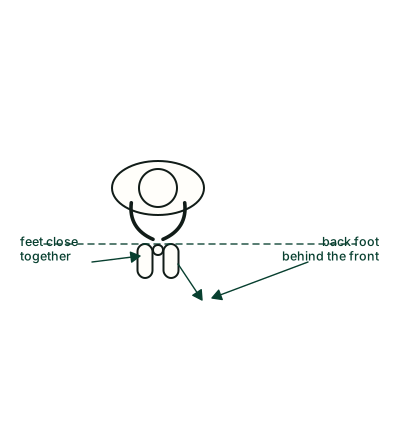
Step 1: Put your back foot behind you
Stand with your feet very close together. Then lift your back foot and put it down behind you, without putting weight on it. You are now practically on your front leg; shifting backwards is no longer possible.
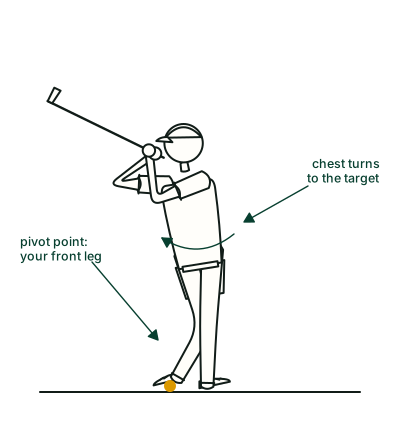
Step 2: Pitch and turn around your front leg
From that stance, hit pitches of about ten metres, turning only around your front leg. Checkpoint: you stay in balance and do not have to take a step after the shot.
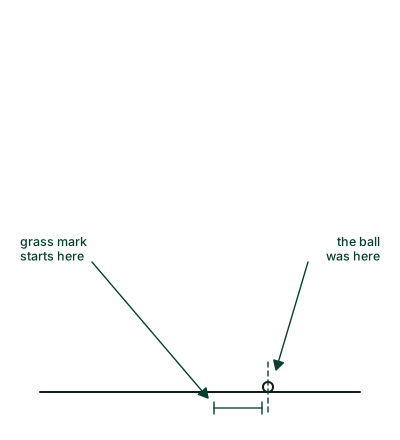
Step 3: Look where the club touched the grass
After every shot, look where the club has touched the grass. That spot should be in front of the ball, on the target side. If it is behind it, your weight is still back.
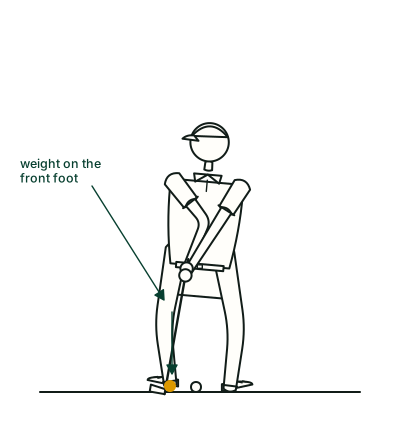
Step 4: Put your back foot back down normally
Put your back foot back down normally and hit the same pitches with the feel of step 2 still fresh: narrow stance, weight on the front foot, turning around that front leg.
How often
Two sets of ten pitches on one leg, then one set of ten in a normal stance
Ten is enough per set because you get visible feedback on every shot about where the club touches the grass, so you can adjust straight away instead of repeating blindly. Only go back to the normal stance once eight of the ten grass marks start in front of the ball. This is a practical choice by the researcher; the sources give no numbers.
Safety
In steps 1 to 3 you are standing almost entirely on one leg. Do that on a flat piece of grass and skip the drill if you have ankle or knee complaints.
Sources
- 2 different drills that will quickly stop you chunking chips (drills van Allen Terrell en Shauheen Nakjavani)
- Here's why you're skulling your chips - and how to stop (Kelley Brooke, LPGA)
Is this your fault to fix?
Caddium measures it in your own swing video — your first analysis is free.
Start free