

Putting
The glass of water
Unstable putting stroke
Let your putting stroke come from shoulders and arms that rock calmly, without your hands and wrists adding anything to it.
Recognise this?
- The putt starts on the right line but finishes left, right, short or long.
- You feel a small flick from your hands just before the ball.
- The movement feels jerky or rushed instead of an even back and through.
- Your upper body turns or sways sideways along with it instead of staying still.
Why it happens
A reliable putting stroke is driven by the shoulders moving up and down while the putter travels back and through on the right path, not by the arms and hands. That is Chuck Cook's starting point: if the upper body turns with it or rolls sideways, then arms, hands and wrists bring unevenness into the movement. Renee Trudeau O'Higgins describes the same thing from the other side: good putters let their stroke come from rocking the arms and shoulders without activating the hands and wrists, and too much hand movement makes it hard to get the ball started on the intended line and causes small vibrations. An important nuance from Tom Stickney: quiet hands do not mean locked wrists. What you have to avoid is the wrists breaking down through the stroke, because then the putter adds loft or takes loft away and moves unpredictably, with varying clubface angles, strike points and speeds. That is exactly why the putt starts well but finishes short, long or wide. The goal is stability with a natural movement, not stiffness.
What the drill fixes
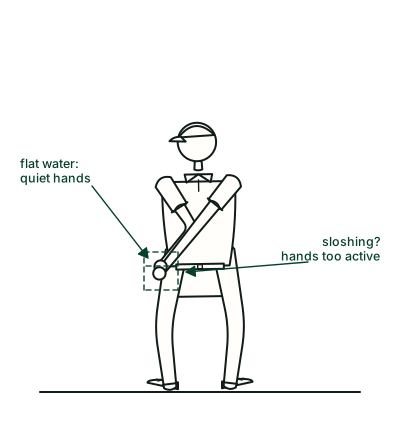
The water is a gauge for your hands. If it sloshes, your wrists or hands have added something; if the surface stays flat, the movement came from your shoulders and arms. You see that on every repetition, without having to judge your own movement.
What you need
- A cup or glass half filled with water
- Your putter
- A practice green or a flat floor
easy
How to do it
Step 1: Set up by Cook's reference point
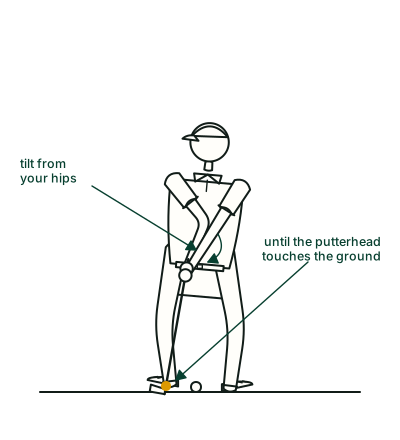
Hold the putter in front of your belly, parallel to the ground, at an angle of 90 degrees to your upper body. Then bend your knees and tilt from your hips until the putterhead touches the ground. From that posture your shoulders can rock up and down without rolling or swaying.
Step 2: Hold the glass with both hands
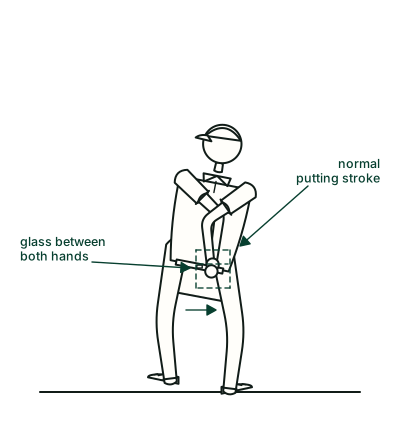
Put the putter down and hold the glass of water between both hands. Make your normal putting stroke with the glass, and watch your hands on the backswing.
Step 3: Watch the water
If the water clearly sloshes back and forth, your hands and wrists are too active. Repeat until the water surface stays calm, back and through.
Step 4: Pick your putter up again
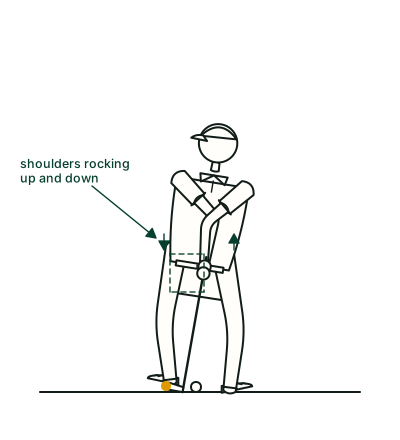
Hit putts while imagining that you are still holding the glass. The movement comes from your shoulders, rocking calmly up and down.
How often
Ten movements with the glass, then ten putts with the putter, alternating that twice
The glass is a feedback drill, not a strength drill: once the water stays calm ten times in a row, carrying on is pointless and you are better off turning the feeling into real putts straight away. You can do step 1 before every putt; Cook says that setup routine is usable on every putt. The numbers themselves are a practical choice by the researcher.
Safety
Do steps 2 and 3 outdoors or over a smooth floor, not over your golf bag or electronics.
Sources
- Use this tip to develop a more consistent putting stroke (Chuck Cook, Golf Teachers Hall of Fame)
- This golf hack will quiet your hands and help you hole more putts (Renee Trudeau O'Higgins)
- Is wrist movement ruining your putting stroke? Here's how to find out (Tom Stickney)
Is this your fault to fix?
Caddium measures it in your own swing video — your first analysis is free.
Start free