

Grip pressure
Light-pressure test
Grip pressure too high
Find a firm, even grip pressure that you hold from address to finish; the tilt boundary is only calibration, to feel where too loose begins.
Recognise this?
- Your forearms and shoulders feel tense before you even start to swing.
- The swing feels short and wooden; you cannot let the club fall freely.
- You hit thin, powerless shots and lose distance while you are trying all the harder to hit it hard.
- After a bucket of balls your hands or forearms are tired.
Why it happens
A freely flowing swing needs relaxed forearms; too much pressure squeezes that movement off. Paul Foston's image: hold on tightly enough to control the club, without strangling it. A measurement study by The Golf Lab mapped grip pressure at six moments in the swing, with sensor grips, motion capture, a 3D force plate and a launch monitor, across professionals, slicers, hookers and high handicaps. The conclusion there: too high a grip pressure — especially among high handicaps — tightens the muscles in the upper body, disturbs the correct order in the swing, takes speed out of the clubhead and harms control of the clubface at impact. Where the sources diverge is set out in the notes.
What the drill fixes
You learn a firm, even pressure that you hold for the whole swing; you use the tilt boundary only as calibration, to feel where too loose begins.
What you need
- Any club
- A quiet spot to stand
- Five balls for the check in step 4
easy
How to do it
Step 1: Club horizontal in front of you
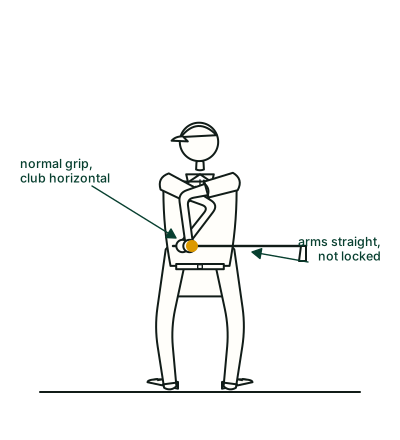
Hold the club horizontally in front of you, in your normal grip, with the clubhead pointing away from you. Checkpoint: your arms are straight but not locked, and the club stays still.
Step 2: Let the pressure drop
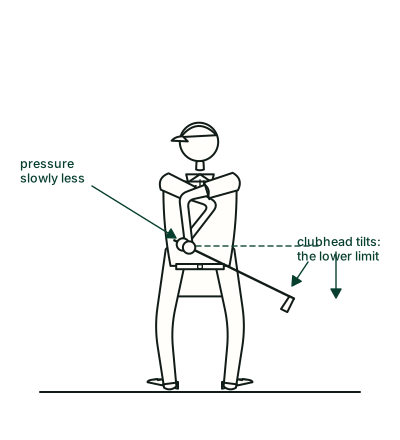
Slowly reduce the pressure in your hands until the club starts to sink or slides out of your hands. This is calibration: you feel where too loose begins, but this is not the pressure you are aiming for.
Step 3: Set a firm, even pressure
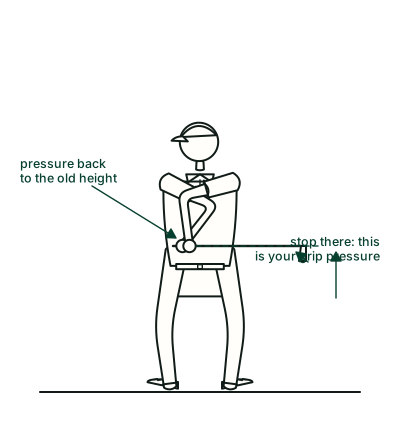
Bring the pressure back until the club is at its original height again, and fix it there. From now on the aim is a firm, even pressure that you hold for the whole swing — not the lowest possible one.
Step 4: Five shots and a face check
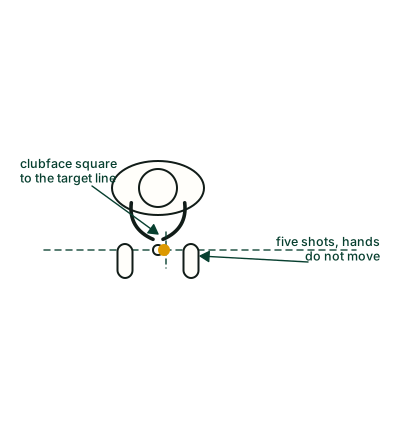
Hit five balls in a row without moving your hands in between and then check whether the clubface still sits square to your target. If it does not, your grip pressure is not right yet.
How often
3 × the test at the start of every practice session, plus 5 shots without moving your hands
Those five shots without moving your hands are exactly the check Foston prescribes; three repetitions of the test at the start of the session is a practical choice, to find the checkpoint again before tension creeps in.
Safety
In step 2, take account of who or what is standing in front of you: the club really can slide out of your hands.
Sources
- What Is The Right Golf Grip Pressure? (Golf Monthly, Top 50 Coach Paul Foston)
- How tightly should you grip the club? Here's what the data says (Golf.com, onderzoek van Liam Mucklow / The Golf Lab)
Is this your fault to fix?
Caddium measures it in your own swing video — your first analysis is free.
Start free