

Shoulder turn
Seated torso turn
You make too little shoulder turn in the backswing
First free up more rotation in your thoracic spine, and then build that rotation straight into your golf posture.
Recognise this?
- Your backswing feels short and tight, and you have the idea that you have to make up for it with your arms to get any length into it.
- Your lead arm bends at the top, or you come up out of your posture to be able to turn further.
- Little distance while you swing hard.
- Stiffness or pain in your neck and lower back after playing.
Why it happens
A limited turn propagates upwards. If the internal rotation of your back hip is limited, that hip stops turning before your torso turn is finished, and the body above it compensates by coming up or by bending the elbow. A stiff thoracic spine and a short latissimus dorsi give a bent lead arm at the top and an incomplete shoulder turn; poor posture with a forward head and rounded shoulders also limits the rotation of the thoracic spine. Limited shoulder mobility limits your backswing, forces compensations and increases the load on your neck and lower back. Your mid back decides the rotation: if it is stiff, your shoulder joints have to take over.
What the drill fixes
You free up the rotation where it has to come from — the thoracic spine — and turn it straight into the movement itself. That last part is not optional: mobility alone does not improve your swing, it has to be built into the movement sequence. That is why this drill ends in golf posture and not in stretching.
What you need
- A chair without armrests
- A club
easy
How to do it
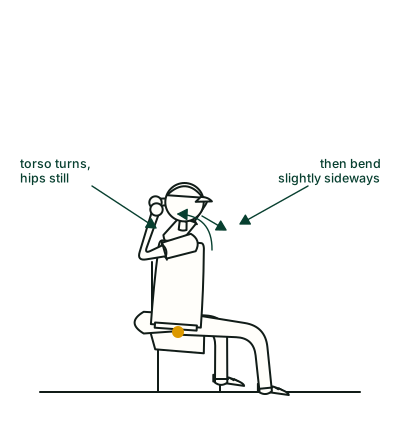
Step 1: Turn on the chair, then bend lightly to the side
Sit upright with your feet flat on the ground and your fingers laced behind your head. Turn your upper body towards your trail side while your hips stay still. At the end of the turn make a light sideways bend and then turn a little further still.
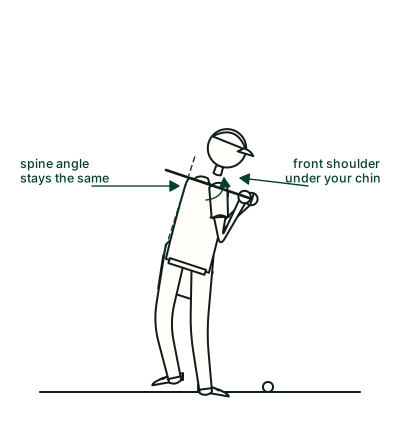
Step 2: The same turn in golf posture
Stand in golf posture with a club across your shoulders and repeat the same turn. Check: your spine angle stays the same and your front shoulder works down and under your chin.
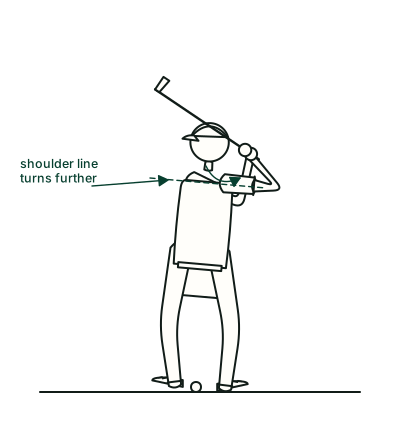
Step 3: Hit three-quarter shots
Then hit shots with a three-quarter backswing. Check: your shoulder line turns further than before the drill — compare it on video.
How often
Step 1 daily until you stop gaining extra range; steps 2 and 3 as a warm-up before every practice session, 10 repetitions.
Repeating until you stop gaining range is the dosage the source gives for this turn-and-bend movement. It is about posture and control, not about long stretching.
Safety
This is mobility work in your back: turn within your range and stop at pain, as opposed to tension. The source links limited rotation precisely to neck and lower back complaints, so forcing works against you.
Sources
- Unlock Your Backswing: Golf Mobility and Stability Tips, Chris Cooper PT DPT, Therapeutic Associates
- Golf Shoulder Mobility Exercises & Turn Drills, Chris Finn, Par4Success
Is this your fault to fix?
Caddium measures it in your own swing video — your first analysis is free.
Start free